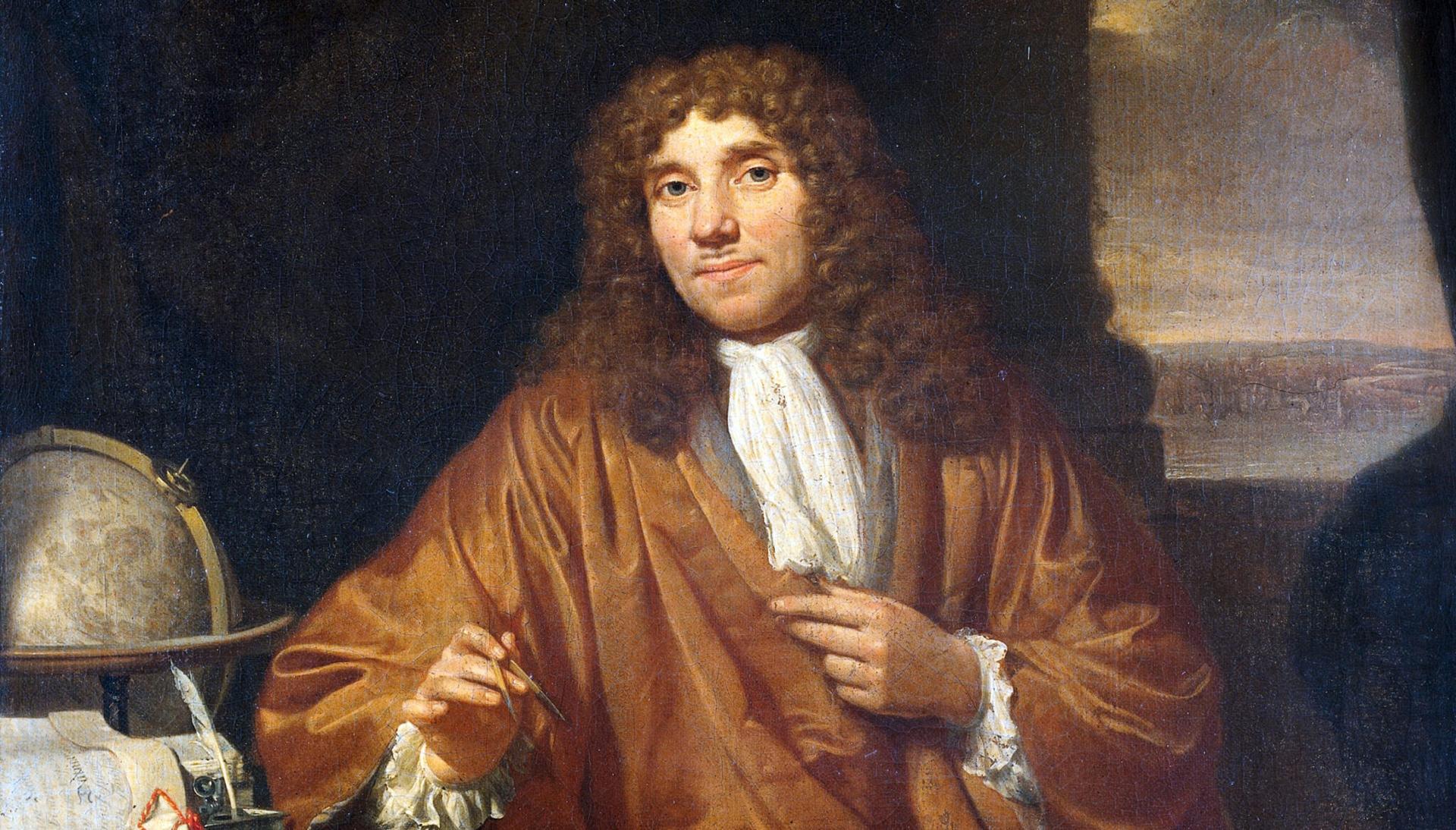
Antoni Van Leeuwenhoek was a Dutch scientist, who lived in the 17th century and is considered to be the "Father of Microbiology". He was a self-taught scientist and is famous for his pioneering work in the field of microbiology and the invention of the microscope.
Van Leeuwenhoek was born in Delft, Netherlands in 1632, and worked as a draper before becoming interested in the field of science. He began to experiment with lenses and eventually developed a microscope that was much more powerful than any that existed at the time. With this microscope, he was able to make detailed observations of a wide variety of microorganisms, including bacteria, algae, and protozoa.
Van Leeuwenhoek's work was truly groundbreaking. He was the first person to observe and describe bacteria, and he was also the first to observe and describe protozoa and sperm cells. His observations of these microorganisms were so detailed and accurate that they were considered to be the first scientific descriptions of these organisms.
In 1673, Van Leeuwenhoek published a book, "Letters on the Animalcules" (also known as "Micrographia"), which contained detailed descriptions of his observations of microorganisms and their behavior. This work was widely read and had a significant impact on the scientific community. He sent his observations and drawings to the Royal Society of London, which published them in its Philosophical Transactions, making him the first microbiologist and one of the first to use the microscope in his observations.
Van Leeuwenhoek's work was not only significant for its scientific contributions, but also for the way in which it was done. He was a self-taught scientist who worked outside of the traditional scientific community, and his work was based on careful observation and experimentation rather than on theoretical assumptions. His work was an inspiration to many scientists and his legacy is still felt in the field of microbiology today.
Van Leeuwenhoek's work and his microscope were a significant contribution to the development of modern science and medicine, as it allowed scientists to observe and study microorganisms, and understand their role in disease and health. His work also helped to establish the field of microbiology and his legacy is still felt today in the many advances that have been made in our understanding of microorganisms and their impact on the world around us.
Conclusion
Antoni Van Leeuwenhoek's story is an inspiring one, as it shows that with passion, perseverance, and a little bit of creativity, anyone can make significant contributions to the scientific field. His work opened the door to the world of microbiology and his achievements continue to inspire scientists today.
In the literature
PubMed and arXiv
- PubMed2010Otomycosis: Diagnosis and treatment.Vennewald I, Klemm E · Clinics in dermatologyRead the paper
- PubMed2015Guideline: vulvovaginal candidosis (AWMF 015/072), S2k (excluding chronic mucocutaneous candidosis).Mendling W, Brasch J, Cornely OA · MycosesRead the paper
- PubMed2000Diagnosis of vaginitis.Egan ME, Lipsky MS · American family physicianRead the paper
- PubMed2025MASLD Under the Microscope: How microRNAs and Microbiota Shape Hepatic Metabolic Disease Progression.Asero C, Franzè MS, Cacciola I · International journal of molecular sciencesRead the paper
Matched automatically on this article’s subjects. Relevance varies — these are suggestions for further reading, not sources for the piece above.
Sign in to save articles and join the discussion.