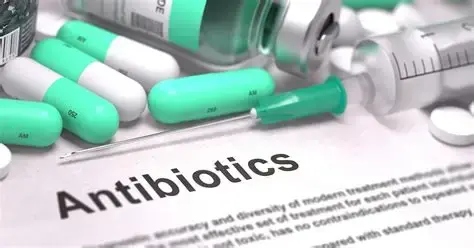
, also known as antibacterials, are medications that destroy or slow down the growth of bacteria.

Facts on antibiotics
- Fleming discovered penicillin, the first natural antibiotic, in 1928.
- Antibiotics cannot fight viral infections.
- Fleming predicted the rise of .
- Antibiotics either kill or slow the growth of bacteria.
Antibiotics are powerful medicines that fight certain infections and can save lives when used properly. They either stop bacteria from reproducing or destroy them. The term antibiotic which means “opposing life”, based on Greek roots, anti: “against” and biotic: “life”.
Antibiotics are used to treat or prevent bacterial infections and sometimes Protozoan infections.
How do antibiotics work ?
There are different types of antibiotic, which work in one of two ways:
- A bactericidal antibiotic, such as penicillin, kills the bacteria. These drugs usually interfere with either the formation of the bacterial cell wall or its cell contents.
- A bacteriostatic stops bacteria from multiplying.
Uses
-
A doctor prescribes antibiotics for the treatment of a bacterial infection. It is not effective against .
-
Viruses cause most upper respiratory tract infections (URTIs), such as the common cold and flu. Antibiotics do not work against these viruses.
-
If people overuse antibiotics or use them incorrectly, the bacteria might become resistant. This means that the antibiotic becomes less effective against that type of bacterium, as the bacterium has been able to improve its defenses.
Side effects
Common side effects are :
- diarrhea
- nausea
- vomiting
- rash
- upset stomach
In the literature
PubMed and arXiv
- PubMed2024Antibiotic resistance: A key microbial survival mechanism that threatens public health.Abbas A, Barkhouse A, Hackenberger D · Cell host & microbeRead the paper
- PubMed2023Molecular mechanisms of antibiotic resistance revisited.Darby EM, Trampari E, Siasat P · Nature reviews. MicrobiologyRead the paper
- PubMed2025Antimicrobial resistance: a concise update.Ho CS, Wong CTH, Aung TT · The Lancet. MicrobeRead the paper
- PubMed2025The WHO Bacterial Priority Pathogens List 2024: a prioritisation study to guide research, development, and public health strategies against antimicrobial resistance.Sati H, Carrara E, Savoldi A · The Lancet. Infectious diseasesRead the paper
Matched automatically on this article’s subjects. Relevance varies — these are suggestions for further reading, not sources for the piece above.
Sign in to save articles and join the discussion.