The Convergent Frontiers: A Comprehensive Report on Scientific and Biotechnological Breakthroughs of 2024-2025
Introduction: The Accelerating Pace of Discovery
The period spanning 2024 and 2025 will be remembered as a pivotal moment in scientific history, characterized by an unprecedented acceleration of discovery. This report documents and analyzes landmark breakthroughs across biotechnology and adjacent scientific fields, revealing a central, unifying theme: the profound convergence of digital technology, engineering principles, and deep biological insight. The digital world of artificial intelligence (AI) and the biological world of genomics and cellular machinery are no longer separate domains. This synergy is creating a feedback loop of innovation, allowing science to move beyond mere observation and into an era of engineering and programming life itself.
The central thesis is that the convergence of three key forces is reshaping the landscape of what is possible:
- The evolution of editing from a revolutionary molecular tool into a clinically approved, commercially viable, and industrially relevant platform.
- The explosive growth of artificial intelligence, particularly predictive and generative models, creating an in silico biologist capable of deciphering biological complexity at scale and speed.
- The formalization of synthetic biology as a true engineering discipline, providing the principles and toolkit to design and build novel biological functions from the ground up.
Simultaneously, these same forces—advanced imaging, computational power, and AI—are being applied to the most complex biological system known: the human brain. Monumental efforts in neuroscience and neurotechnology are charting the brain's intricate wiring diagram and establishing direct communication channels with it, opening new frontiers in understanding cognition and treating neurological disease.
This report provides an exhaustive analysis of these four principal domains of innovation, detailing technical underpinnings, real-world impact, and the profound ethical, safety, and societal challenges that accompany these capabilities. The evidence demonstrates we are at the dawn of a new epoch—one defined by the ability not only to read and understand the code of life, but to write, edit, and engineer it with increasing precision and purpose.
I. Rewriting the Code: The Evolution of Genome Editing
1.1. Beyond the Cut: The Rise of Base and Prime Editing
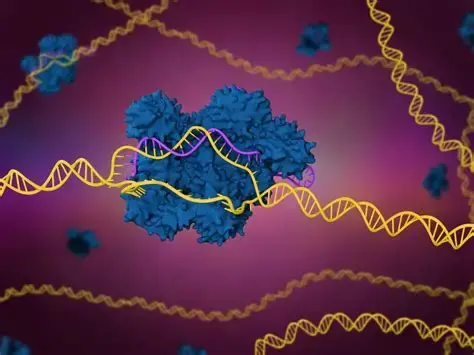
- CRISPR-Cas9 initially revolutionized editing by enabling targeted double-strand breaks (DSBs) in . While powerful, reliance on error-prone repair pathways limited precision and led to unwanted .
- Base Editing acts as "chemical surgery," achieving precise, single-base changes without DSBs, ideal for correcting point mutations.
- Prime Editing is a versatile "search and replace" tool, capable of all single-base substitutions and small insertions/deletions, using a nickase fused to reverse transcriptase and a prime editing guide (pegRNA).
| Feature | CRISPR-Cas9 | Base Editing | Prime Editing |
|---|---|---|---|
| Mechanism | DSB + Repair | Nickase + Deaminase | Nickase + Reverse Transcriptase |
| Type of Edit | Indels, Knockouts | Single base transitions | All base substitutions, indels |
| Key Components | Cas9, gRNA | nCas9/dCas9, Deaminase, gRNA | nCas9, RT, pegRNA |
| Primary Advantage | Simplicity | High precision, no DSB | Versatility ("search and replace") |
| Clinical Status | Approved (CASGEVY) | Clinical trials | First clinical trial (CGD, 2024) |
1.2. From Lab to Clinic: The Dawn of Approved CRISPR Therapies
- CASGEVY™ (exagamglogene autotemcel), developed by Therapeutics and Vertex Pharmaceuticals, became the first FDA-approved CRISPR therapy for sickle cell disease (SCD) and beta-thalassemia in December 2023.
- The therapy edits the BCL11A gene in a patient's hematopoietic , boosting fetal hemoglobin and alleviating disease symptoms.
- This milestone validates CRISPR therapeutics and opens the door to a burgeoning clinical pipeline, with ~250 gene editing trials underway, including approaches and next-generation tools like prime editing.
1.3. The Programmable Harvest: Gene Editing in Agriculture and Consumer Products
- Gene editing is expanding into agriculture and consumer goods, focusing on direct consumer benefits (e.g., non-browning bananas, enhanced flavor/aroma apples, biofortified "Golden Lettuce").
- Futuristic foods like "cultured beef rice" (animal cells grown in rice grains) offer novel, sustainable sources.
- Bioluminescent "Firefly Petunia" became the first genetically engineered glowing plant sold to consumers, symbolizing the normalization of biotech in daily life.
1.4. The AI Co-Pilot: Automating and Enhancing Gene Editing with CRISPR-GPT
- CRISPR-GPT, an AI system from Stanford, Princeton, UC Berkeley, and Google DeepMind, acts as an "AI co-pilot" for genome engineering, automating experimental design, gRNA selection, protocol drafting, and data analysis.
- Demonstrations showed junior researchers successfully performing gene knockouts and activations guided entirely by the AI.
1.5. Navigating the Genome: Ethical and Safety Frontiers
- Key concerns: off-target/on-target effects, germline vs. somatic editing, equitable access, and dual-use/biosecurity threats.
- Germline editing for reproduction remains under a global moratorium due to unresolved safety and societal risks.
- The democratization of gene editing tools raises new biosecurity and equity challenges.
II. The Algorithmic Biologist: Artificial Intelligence as Catalyst for Discovery
2.1. AlphaFold 3 and Beyond: Revolutionizing Structural Biology
- AlphaFold 3 (DeepMind/Isomorphic Labs, May 2024) predicts structures and interactions for proteins, DNA, RNA, ligands, and ions using a diffusion-based generative model.
- Dramatically improves rational drug design by predicting drug-target interactions, accelerating early drug development.
- AlphaFold 3's impact was recognized with the 2024 Nobel Prize in Chemistry.
2.2. The End-to-End AI Drug Discovery Pipeline
- Insilico Medicine's Pharma.AI platform uses generative AI for target identification (PandaOmics), molecule generation (Chemistry42), and prediction.
- Lead drug INS018_055 (for idiopathic pulmonary fibrosis) became the first AI-designed molecule for an AI-discovered target to reach Phase II trials, reducing development time and cost dramatically.
- NVIDIA's BioNeMo cloud provides generative biomolecular models, with major partnerships (e.g., Genentech).
| Platform/Company | Core AI Tech | Application | Notable Milestone |
|---|---|---|---|
| Insilico Medicine | GANs, Transformers | End-to-end drug pipeline | AI drug in Phase II |
| NVIDIA (BioNeMo) | MegaMolBART, DiffDock, OpenFold | Biomolecular model platform | Genentech alliance |
| Google DeepMind | Diffusion, geometric DL | Structure/interactions | Nobel Prize, AlphaFold |
2.3. The AI-Discovered Arsenal: A New Era for Antibiotics
- AI is designing entirely new classes, circumventing decades-long stagnation.
- MIT's Antibiotics-AI Project generated 36 million compounds, discovering novel mechanisms (e.g., membrane disruption).
- AI-assisted "digital bioprospecting" scans extinct/extremophile proteomes for antimicrobial peptides, rapidly identifying new candidates.
2.4. AI in the Clinic: Transforming Diagnostics and Personalized Medicine
- AI is revolutionizing radiology, accelerating scan interpretation, triage, and automatic report drafting.
- AI-powered MRI drastically reduces scan times; generative models boost radiologist efficiency.
- AI integrates genomic, imaging, and EHR data for precision medicine, early diagnosis, and biomarker discovery.
2.5. The Ghost in the Machine: Addressing Algorithmic Bias and Data Privacy
- Algorithmic bias: AI models can perpetuate health disparities if trained on non-representative data (e.g., misdiagnosis in minorities).
- Data privacy: Large models risk data leakage, re-identification, and cyberattacks. Explainable AI (xAI) and new regulatory frameworks are essential for trust and transparency.
III. Engineering Life: The Maturation of Synthetic Biology
3.1. The Foundational Toolkit: DBTL Cycle, Standardized Parts, and Biological Circuits
- Design-Build-Test-Learn (DBTL) cycle mirrors engineering approaches, using computational tools, DNA synthesis, and iterative learning to optimize biological systems.
- Standardized parts (e.g., BioBricks) and modular, interchangeable components enable rapid, predictable circuit assembly.
- Biological circuits (toggles, logic gates, sensors) allow cells to perform programmable, decision-making functions.
3.2. Living Therapies: Engineering CAR-T Cells and Smart Microbes
- CAR-T cell therapies engineered with modular domains, logic gating (e.g., synNotch), safety switches, and "armored" features for efficacy and safety.
- Synthetic biology transforms living cells into programmable medicines capable of complex, adaptive responses.
3.3. From Bioreactors to Consumers: SynBio in Manufacturing and Daily Life
- Engineered microbes are producing drugs, , plastics (PHAs), and even food ingredients (Solein) from renewable inputs.
- SynBio targets sustainable agriculture by engineering nitrogen-fixing microbes or crops.
- Consumer products: glowing plants, lab-grown cotton, enzyme-based textile recycling.
3.4. Accelerating Evolution: The T7-ORACLE Platform
- T7-ORACLE enables continuous, ultra-rapid protein evolution in E. coli using an orthogonal viral replication system with engineered, error-prone polymerase.
- Demonstrated rapid evolution and potential for therapeutic protein optimization.
3.5. The Pandora's Box of Creation: Biosecurity, Biocontainment, and Dual-Use Concerns
- Environmental risks: GEMs could disrupt ecosystems or transfer engineered genes.
- Biocontainment strategies: auxotrophy, kill switches, xenobiology (non-natural amino acids/XNA).
- Dual-use threat: democratized tools could be misused for bioterrorism, requiring global security measures and new cyberbiosecurity protocols.
IV. Charting the Mind: Breakthroughs in Neuroscience and Neurotechnology
4.1. The Ultimate Blueprint: Advances in Connectomics
- Connectomics achieved the first complete adult brain connectome (fruit fly) and a detailed cubic-millimeter map of human cortex, enabled by electron microscopy and AI.
- Revealed new neuron types, ultra-strong connections, and provided vast datasets for computational neuroscience.
4.2. The Mind-Machine Nexus: The Rapid Evolution of Brain-Computer Interfaces (BCIs)
- Neuralink's PRIME study: first wireless intracortical implant in a human (2024), restoring computer control by thought in a quadriplegic participant.
- Synchron's Stentrode: minimally invasive, endovascular BCI, enabling ALS patients to control devices.
- Speech-decoding BCIs now enable high-accuracy, fluent communication, including translation of internal speech.
| Company/Platform | Technology | Invasiveness | Application | Milestone (2024-25) |
|---|---|---|---|---|
| Neuralink | Microelectrode array | Highly invasive | Motor/communication | First human implant, thought-based control |
| Synchron | Endovascular stent array | Minimally invasive | Motor/communication | Controlled iPad, ongoing trials |
| Blackrock Neurotech | Utah Array | Highly invasive | Motor restoration | Longest BCI patient (9+ years) |
| Precision Neuroscience | Surface electrode array | Invasive | Mapping/motor | Successful pilot, ongoing development |
4.3. Unlocking the Brain's Secrets: Memory, Appetite, and Aging
- uLIPSTIC tool enables mapping of at synapses, illuminating memory formation.
- Discovery of a simple, 3-neuron circuit linking hunger and chewing reflex.
- Platelet Factor 4 (PF4) identified as a rejuvenating factor for aging brains in mice, reducing inflammation and improving cognition.
4.4. The Neuroethical Frontier: Agency, Identity, and Privacy
- Mental privacy is challenged by BCIs decoding internal speech; neural data could reveal thoughts, emotions, health, or biases.
- Agency and responsibility are blurred—who is accountable for BCI-initiated actions?
- Equity concerns: High costs risk creating cognitive privilege; informed consent is complex for vulnerable patients.
- Urgent need for new "neural rights," legal protections, and ongoing public dialogue.
V. A Wider Lens: Notable Discoveries Across the Scientific Spectrum
5.1. Cosmic Revelations and Planetary Science
- Event Horizon Telescope confirmed strong, spiraling magnetic fields at the edge of the Milky Way's black hole.
- ESA's LISA mission (launch 2035) will detect gravitational waves from supermassive black hole mergers.
- 85 new exoplanet candidates identified; first detection of water vapor in a "super-Earth" exoplanet.
- OSIRIS-REx asteroid sample accessed; new moons discovered; evidence of subsurface ocean on Mimas (Saturn); Mars rover finds potential biosignature.
5.2. Fundamental Physics and New Materials
- First microscopic gravity measurements bridge quantum mechanics and relativity.
- Discovery of a new "light-matter hybrid" phase.
- Calcium-ion batteries developed as sustainable alternatives to lithium-ion; record-breaking roll-to-roll printed solar cells tested in space.
- Fusion milestone: ITER central solenoid completed.
5.3. Planetary Health and Environmental Science
- Fourth global coral bleaching event confirmed, driven by record ocean temperatures.
- Methane emissions from oil/gas production three times higher than reported; North Sea pollution spikes near offshore rigs.
- World's first Solein factory (Finland) starts production—protein from microbes using air, water, and electricity.
- Innovations: self-powered solar panel cleaning, atmospheric water harvesters ("WaterCube").
Conclusion: The Dawn of a Convergent and Programmable Future
The scientific and biotechnological breakthroughs of 2024-2025 are the evidence of a new paradigm: convergence. Biology, computer science, and engineering are merging, and the most impactful discoveries emerge from their intersection. AI has become a new language for understanding biological complexity; engineering principles are being applied to DNA and neural circuits alike.
This convergence shifts our role from observers of nature to programmers of it. The maturation of CRISPR, especially base and prime editing, allows precision programming of life's source code. Synthetic biology provides the design principles and modularity to program complex cell behaviors, while BCIs begin to link directly with the brain. AI is the universal operating system for this new era.
The challenges ahead are as profound as the opportunities: scaling sustainable biomanufacturing, achieving safe in vivo gene correction, completing the human connectome, and developing theoretical frameworks to translate structure into function. Ethical challenges—access, equity, dual-use governance, and neural rights—demand urgent, collective action.
The ultimate test of this new era will be our ability to wield these powers wisely and equitably, ensuring that the ability to program life benefits all humanity and preserves the planet we share.
In the literature
PubMed and arXiv
- PubMed2022Artificial intelligence and synthetic biology approaches for human gut microbiome.Kumar P, Sinha R, Shukla P · Critical reviews in food science and nutritionRead the paper
- PubMed2025Genome-coverage single-cell histone modifications for embryo lineage tracing.Liu M, Yue Y, Chen X · NatureRead the paper
- PubMed2025[Artificial intelligence-assisted design, mining, and modification of CRISPR-Cas systems].Mao Y, Chu G, Liang Q · Sheng wu gong cheng xue bao = Chinese journal of biotechnologyRead the paper
- PubMed2025CRISPR Treatments for AI-Designed Synthetic Viruses: Rapid Programmable Countermeasures for Emerging and Engineered Viruses.Gladue DP, O'Mahony A · VirusesRead the paper
Matched automatically on this article’s subjects. Relevance varies — these are suggestions for further reading, not sources for the piece above.
Sign in to save articles and join the discussion.