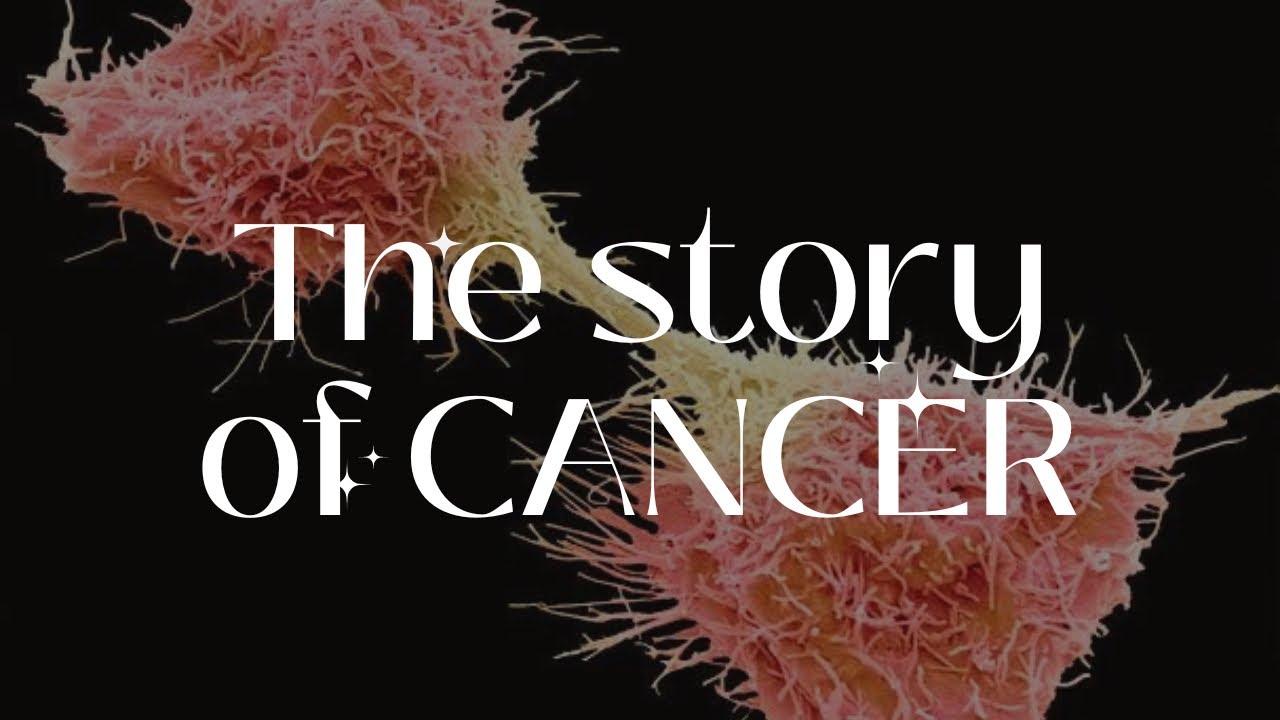
There was once a cell named Cindy who lived in the human body. She was a healthy cell, with a strong nucleus and plenty of to keep her energized. Cindy worked hard every day, performing her duties and helping to keep the body running smoothly.
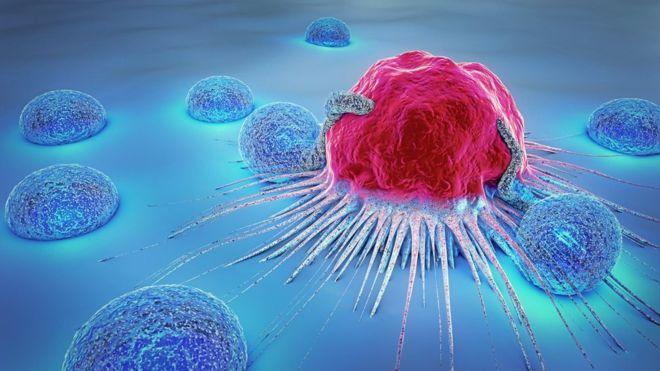
One day, something strange started to happen to Cindy. She began to divide and multiply at an alarming rate, out of control. She didn't know what was causing it, but she knew it wasn't normal.
As Cindy's numbers grew, the other cells in the body began to notice. They tried to stop her, but it was no use. Cindy's division was unstoppable, and soon she had taken over an entire section of the body.
The other cells realized that something was very wrong, and they called on the body's for help. The immune system cells fought back against Cindy and her rogue cells, but they were outnumbered and outmatched.
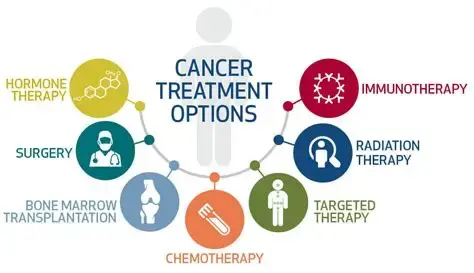
The body knew it had to take drastic measures to save itself. It called on the cells, which arrived and began to attack Cindy and her rogue cells with all their might.
Cindy and her cells fought back with all their might, but in the end, they were no match for the chemotherapy cells. One by one, they were destroyed, until only a few stragglers remained.
With the threat finally defeated, the body could breathe a sigh of relief. Cindy and her rogue cells had been stopped, and the body was safe once again. From then on, the body remained vigilant, always on the lookout for any sign of cancer cells trying to take over.
References
Resolved via Crossref
- 01Hallmarks of Cancer: The Next Generation
Douglas Hanahan, Robert A. Weinberg · Cell · 2011
10.1016/j.cell.2011.02.013
In the literature
PubMed and arXiv
- PubMed2019A Review of Cell-Based Computational Modeling in Cancer Biology.Metzcar J, Wang Y, Heiland R · JCO clinical cancer informaticsRead the paper
- PubMed2014Three-dimensional models of cancer for pharmacology and cancer cell biology: capturing tumor complexity in vitro/ex vivo.Hickman JA, Graeser R, de Hoogt R · Biotechnology journalRead the paper
- PubMed2012The biology and the genetics of Hurthle cell tumors of the thyroid.Máximo V, Lima J, Prazeres H · Endocrine-related cancerRead the paper
- PubMed2016Focus Issue: Cell biology meets cancer therapy.Gough NR · Science signalingRead the paper
Matched automatically on this article’s subjects. Relevance varies — these are suggestions for further reading, not sources for the piece above.
Sign in to save articles and join the discussion.