Scientists have created the world's first synthetic cell, the "SpudCell." One of the greatest mysteries of science has long captivated the human imagination: what is required for something to be alive? It's a question which has confounded philosophers, scientists and theologians alike. We are aware of what living things can do, such as growing, reproducing, transforming energy into living things, and transmitting their genetic material to the next generation, but we don't know how these capacities first appeared in biology.
From the smallest bacterium to the largest blue whale, all life on Earth has its roots in a single cell. All the machinery required to support life is contained in that humble cell. However, scientists have never managed to develop a full life cycle, from scratch. Until now.
The researchers at the University of Minnesota have created a synthetic cell-like system called SpudCell: a small system composed of nonliving chemical components that can perform a series of life-like behaviors. It may be able to absorb resources, develop, replicate , reproduce, and even experience a rudimentary form of selection. It is the first bottom-up synthetic system to show a full cell cycle, the team said.
There is a crucial difference before going too far: scientists have not claimed to have created life. SpudCell is not a completely independent living being. It cannot live alone, produce all the molecules necessary to its own survival, or reproduce indefinitely without the assistance of a laboratory. It can be characterized as a synthetically created cell-like system with a defined chemistry that mimics many of the vital functions of living cells. The study is also available for public consumption as a preprint (or paper before ), where it is currently available.
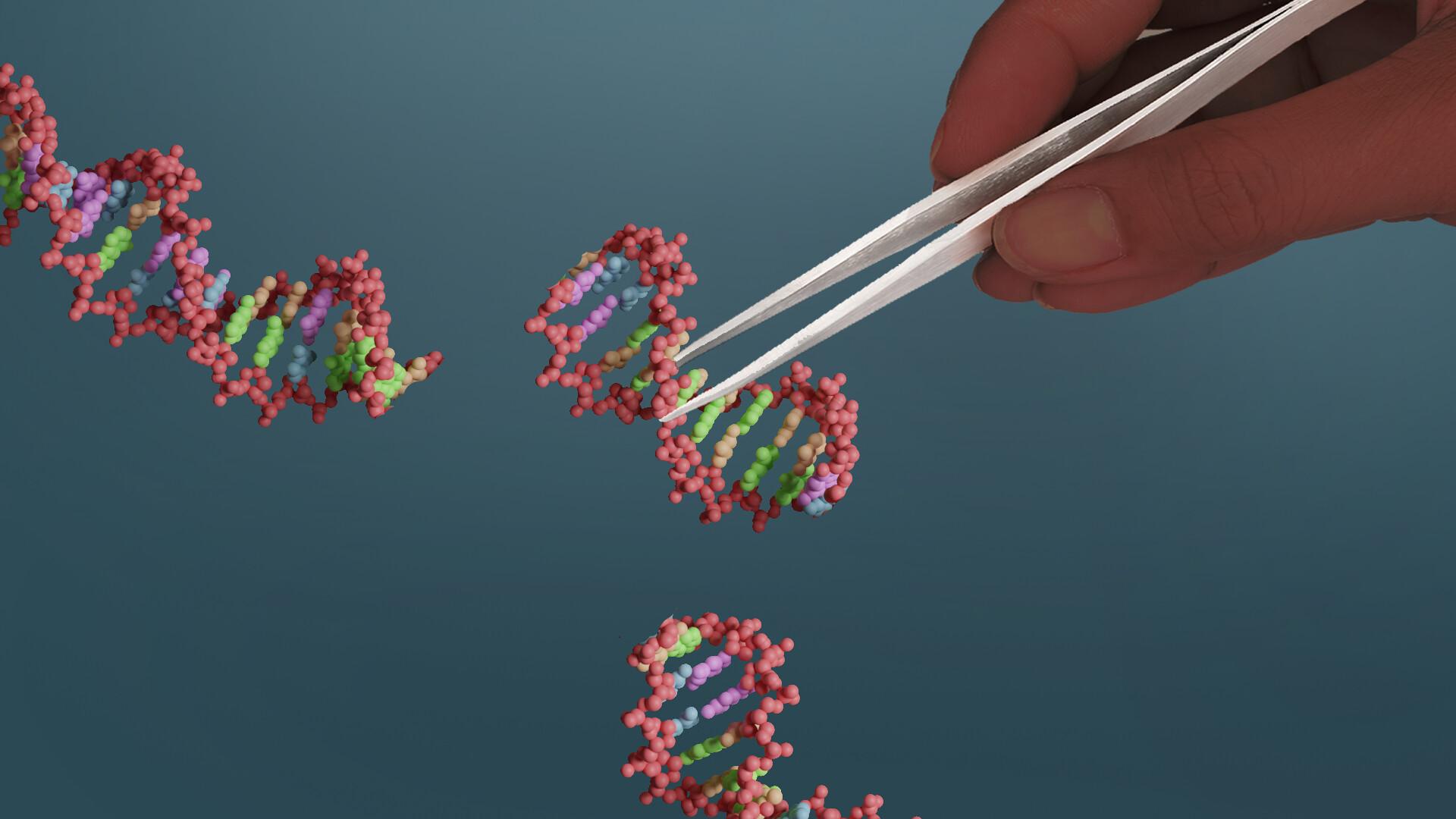
Despite these limitations, the feat is one of the biggest for synthetic biology. The researchers did not simply modify an existing bacterium, as many of the "synthetic cells" of the past, but began with individual molecules and then built a living cell system from scratch. The question then becomes "Can we edit life?" instead of "Can we build life's basic machinery ourselves?"
Why Scientists Have Been Chasing Artificial Cells for Decades
It takes a step back to appreciate the importance of SpudCell. Modern cells are incredibly complicated. Even the simplest bacterium has millions of molecules operating in the most precise manner. Other are built from proteins. DNA stores instructions. Membranes regulate entry and exit. are catalysts that increase the rate of chemical reactions. Each piece is reliant on numerous other components.
It's similar to unlocking a contemporary smartphone. The battery, the processor, the screen and the camera can be found. However, if a person asked you to take the raw materials and make all the tiny chips, wires, sensors, and circuits in this device, you'd soon see how complicated this device really is. Cells are much more complicated than smartphones.
A seemingly simple question has been posed for years: what are the essential components required for a structure to have the characteristics of a living cell? Numerous previous projects simplified existing bacteria by adding and subtracting one at a time. That study showed that there was a minimal amount of DNA that a cell could live with, but there were still many structures that the cells inherited from their biological ancestors.
SpudCell has done things differently. The researchers went the other way, starting at the bottom and working their way up that is, they used components that they knew would work and created a system from the ground up. Each ingredient was selected on purpose, allowing scientists to have a much greater degree of control over the behavior of the cell.
Construct a Cell That Uses No Borrowing
Suppose that someone gave you each of the pieces that would be required to assemble a car. You don't get a working car to work on you get tires, bolts, wires, gears, glass, rubber and even sheets of metal. You don't have to improve the car. It's to make the car.
That's essentially what the Minnesota team attempted with biology. They didn't start with a living cell; instead, they used purified chemical components to build SpudCell. It has a lipid membrane, a small synthetic with about 90,000 DNA base pairs distributed across multiple DNA molecules, and a few specific sets of enzymes for carrying out the chemistry necessary for replication and growth.
Every component is known, and this is what the researchers get in biology rarely: complete control. There are many interactions within natural cells that have developed over billions of years, and many more genes that are still not understood. SpudCell is different. It is designed with a careful selection, measurement and assembly of its ingredients, so when something happens to change, researchers can tell exactly which molecule is responsible. It is quite useful, not because it is a better cell than nature's, but because it is a cell which can be understood step-by-step by scientists.
The Actual Breakthrough Isn't "Creating Life"
Whenever news such as this crops up, headlines frequently say that scientists have "created life." That's an oversimplification. Life isn't defined by a single characteristic. Most biologists would consider life to consist of a set of skills:
- storing genetic information
- using energy
- growing
- reproducing
- responding to the environment
- evolving over generations
These are all done continuously and independently by nature. SpudCell does a few of them, only in the laboratory under carefully controlled conditions. It still requires molecules to be provided from the outside, such as ribosomes and nutrients, and is still not able to live forever.
That doesn't take anything away from the achievement. It's like the Wright brothers' first airplane in a lot of aspects. The Wright Flyer wasn't a commercial aircraft. It wouldn't be able to cross oceans. It was not able to transport hundreds of persons. But it did show that there was a possibility of controlled powered flight, and all that has come since, from commercial airlines to space shuttles, started with that first successful one.
SpudCell could be a comparable moment in synthetic biology. It demonstrates the fact that a lot of the essential behaviours of living organisms can arise from a carefully designed chemical system.
Perhaps the most philosophical thing about SpudCell is that it is the testing of one of our oldest intuitions. One tends to think of life as being distinct from chemistry. Over the centuries many people have thought that living organisms had a special "vital force" which set them apart from ordinary matter. This idea was replaced by genetics, molecular biology and biochemistry in modern biology.
Then SpudCell takes the discussion one step further. Does it seem possible that the properties of life arise out of organization, not from any mysterious ingredient, and that a collection of non-living molecules can be organized so that they grow and replicate DNA, divide and undergo selection? This isn't a convincing explanation for the origin of life on Earth 4 billion years ago. However, it gives scientists an experimental base on which to conduct more research into one of science's oldest mysteries. Rather than the study of fossilized organisms or computer simulations, scientists can now create increasingly complex chemical systems in the lab and observe the emergence of lifelike behaviors.
More Than an Academic Achievement
This is not a mere curiosity trial to please the scientists. The researchers envision synthetic cells one day becoming small biological factories. Programmable cells might someday be used to make medicines and specialty chemicals, even plastics that are good for the environment, in a biological process without the need for petroleum, toxic solvents or high temperatures unlike traditional manufacturing methods.
Those applications are still years even decades off. However, all transforming technologies begin with a first successful prototype. When the first computers occupied whole rooms and now fit in our pockets, synthetic cells could someday find applications in medicine, industry and protecting the environment.
On first sight, SpudCell seems to be just a tiny bubble. But within that minuscule membrane is an awesome concept: the fundamental machinery of life could be a concept we can learn about, and possibly even manufacture.
Five Mind-Bending Takeaways
1. How a Bag of Chemicals Learned to Feed, Grow and Divide
Think of creating a bubble that is smaller than a human hair. Within that bubble you put DNA, enzymes, nutrients and dozens of carefully selected molecules. All of them are lifeless they are all chemicals and do a particular job. Now suppose this little bubble begins to grow. It replicates its genetic material. Its outer membrane bulges out. It will eventually burst and form two smaller bubbles, which will then do the same.
The University of Minnesota researchers did just that with SpudCell. The amazing thing is that no individual component is new scientists have known many of these kinds of molecules for years. The key to the breakthrough is getting them all to function as an integrated system.
Synthetic biology was developed over decades, addressing individual small problems. One group worked on copying DNA. Another worked on protein re-creation. Others created manmade membranes. SpudCell bundles together many of those aspects in a single platform and is able to replicate a large portion of the cellular life cycle in the lab.
2. A Man-Made Cell Containing a Catalyst
All living cells are in need of a steady stream of raw materials, and growth ceases when there are no nutrients. In naturally occurring cells, this is solved by means of very complex transport mechanisms built into the cell membrane. They actively extract nutrients from their environment and use them to produce proteins, DNA, and more. Creating these transport systems would have been a huge added complication.
The researchers instead arrived at a very elegant solution. They developed thousands of tiny "helper" bubbles they call "feeder liposomes." These are small vesicles which act like delivery trucks. They each contain fresh membrane material, enzymes, ribosomes, small molecules and other ingredients that SpudCell itself can't produce. As soon as one of these feeder bubbles touches SpudCell, special proteins made in the two cells react and cause their membranes to fuse together. After fusion, the cargo goes into the synthetic cell, which restocks the supplies and enables the cell to grow.
It's similar to docking a supply spacecraft to the International Space Station: the station does not have to produce all the equipment; instead, supplies are delivered from outside as needed. SpudCell does just that. It does not try to be fully independent but uses elaborate molecular equipment from feeder vesicles, while researchers strive for increased independence.
Why Protein Production Matters
All of the instructions in DNA must ultimately be converted to protein. Proteins are the workers of all the cells some build new DNA, some repair damage, some produce energy, and others carry out functions such as moving nutrients around or aiding cell-to-cell communication. If there were no proteins, DNA would be nothing more than a set of instructions that no one could read.
Proteins are synthesized in natural cells by structures known as ribosomes, which are very complex molecular machines assembled from and proteins. Currently, SpudCell is unable to self-assemble ribosomes; in place of this, the feeder liposomes provide them. This could be interpreted as a constraint, but it's a good engineering choice. Instead of solving all the biological problems at once, the researchers concentrated on how to assemble all the components into a fully functional system, so that each generation of synthetic cells can be somewhat more independent than the preceding one.
This is a typical method in engineering. No one creates an airplane of the modern age starting with nothing you always start with known components and replace them with better ones. Synthetic biology is taking a similar road.
Solving One of Biology's Hardest Problems
Cell division, perhaps, is the greatest challenge in the construction of artificial cells. Growing is pretty easy; dividing into two healthy daughter cells is not. Natural cells are supported by a complex internal structure known as the cytoskeleton it's like scaffolding, conveyor belts and small muscles. When the cell divides, this structure organises the contents of the cell, positions the DNA, and physically pulls the membrane apart. Scientists have been trying to replicate this machinery for years.
The Minnesota team didn't copy nature, though they asked a new question: what if there was a more straightforward way? Their response was quite ingenious. Instead of building an internal structure, they built proteins that naturally stick to the inside of the membrane. The more proteins that are added, the more crowded the membrane becomes, and that crowding will eventually result in enough physical stress to bend the membrane inwards. Gradually the middle of the cell constricts, and in the end the membrane splits, creating two daughter cells.
In other words, the researchers took one of biology's most complex mechanical systems and devised an alternative that was mostly physical, dealing with molecular crowding. It's a great reminder that evolution's solutions do not necessarily reflect the only solutions. One design was created by nature over billions of years; engineers found another.
Does SpudCell Really Multiply?
To some extent, yes. SpudCell grows and copies its DNA, increases its membrane, and splits into daughter cells, once it has been provided with nutrients and molecular machinery. The daughter cells can go through further cycles under controlled lab conditions. That is why the research is called the first "bottom-up synthetic system" that can complete an entire cell cycle.
But it's not yet a smooth process. Although natural organisms divide with incredible reliability, SpudCell's division is less organized. It presently does not have its genetic material in chromosomes, but rather in several DNA . Without more advanced machinery, the inheritance of DNA during division can be uneven, with some daughter cells getting different bits of DNA. One of the next big engineering challenges is to enhance that reliability.
A Hint of Evolution
An interesting finding emerged after researchers observed many generations of synthetic cells. In certain SpudCells, the natural growth of the cell was found to occur before dividing, and cells that were bigger tended to give rise to more offspring. As time went on, more and more of the experimental population consisted of these successful cells. That's like one of the basics of evolution: those who have favorable attributes have more survivors to carry on their genes. The scientists call this "selection."
It isn't full Darwinian evolution yet, but it's an important first step. The bigger challenge is . Errors in the copying of DNA are required to allow natural evolution to occur the vast majority of those changes have no effect whatsoever, some are harmful, and a very small number provide an advantage. Evolution takes place over millions of years due to these rare positive mutations.
SpudCell is now making virtually no mistakes in copying its DNA, so it is not very diverse. Researchers are looking into ways to raise the mutation rate in a controlled manner just enough to provide variation but not so much that the synthetic genome stops working. This is one of the key challenges for the future of synthetic biology.
Why Scientists Don't Call It "Alive"
It's easy to get carried away with SpudCell and say that scientists have now made life, but the researchers cannot make that claim, and there are good reasons why. Living cells continually produce their own energy, make their own ribosomes, control their internal chemistry, repair damage, adapt to changes in their surroundings, and, under appropriate conditions, reproduce indefinitely.
SpudCell relies heavily on outside support. Scientists provide nutrients, and molecular machinery is provided by feeder liposomes. It does not completely metabolize on its own. It's short-lived. And it is not divided as precisely as natural cells are. These are not just minor things they mark the limits of today's synthetic biology relative to real, independent life. It's possible that boundary could change in the coming decades, but for the time being, SpudCell is more of a useful artificial organism.
It is a scientific platform. Each improvement brings researchers new knowledge about the minimum requirements for cellular life, and each missing function is the next challenge for engineering. A better question than "Is SpudCell alive?" may be "How much of life can we build?" and the answer is expanding with each experiment.
The Wright brothers flew their first airplane in 1903, and it only flew for a minute or so. It was very primitive by today's standards. It could not transport people, span continents, or serve as a feasible mode of transport. It is remembered in history, however, because it demonstrated something more significant than performance it demonstrated the possibility of controlled human flight.
SpudCell could be that moment for biology. It isn't life, and it isn't a man-made life form that can thrive independently. Rather, it shows that scientists can join together carefully chosen chemical ingredients to construct a system similar to a living cell, one that gives rise to many of the behaviours normally considered hallmarks of life. That's a big win for synthetic biology. In addition to studying how cells function, scientists are starting to ask a more ambitious question: what kinds of biological systems can be designed?
A New Kind of Factory
Industrial production has depended on high temperatures, high pressures, toxic solvents and raw materials from petroleum for over 100 years. The production of plastics, pharmaceuticals, fuels and specialty chemicals requires a significant amount of energy. Nature provides very different solutions to the same problems: no oven is required, since bacteria create complex molecules at room temperature, and no high-pressure environment is necessary, since those molecules are made by an astounding array of microscopic molecular machines.
Scientists are hoping to emulate that efficiency by creating synthetic cells. Rather than constructing gigantic chemical factories, future chemical manufacturing could instead be done with programmable life systems that produce valuable products with much less waste. Suppose you could create a synthetic cell that generates a cancer drug or one that absorbs carbon dioxide and transforms it into valuable chemicals or another that produces biodegradable plastics from non-fossil fuel sources.
These concepts are not yet commercial reality, and may be years or even decades away. Meanwhile, researchers believe SpudCell is a first-generation platform that could be adapted for numerous applications in the future.
One of the greatest beneficiaries of this technology could be medicine. The pharmaceuticals produced today are generally made in a central facility and then distributed globally. Synthetic biology could enable the creation of some therapies closer to where they are needed one long-range vision is highly programmable biological systems that produce pharmaceuticals on demand.
Scientists also envision synthetic cells becoming micro delivery vehicles. Future engineered cells could be programmed to release medicine only in targeted areas, such as within a or an infected area of the body. Researchers also hope to use synthetic cells to gain insight into disease since all the components of SpudCell are known and deliberately selected, it is easier to change one variable at a time and see exactly what effect it has. That kind of control is nearly impossible when dealing with natural cells that have thousands of interacting genes and molecules.
While speculative, these applications show that researchers consider synthetic cells to be more than just a scientific curiosity. They may ultimately prove to be new tools in medical and biotechnology research.
A Question About the Origin of Life
One of the most interesting possibilities isn't industry-related at all it's a matter of history. Researchers have yet to determine the exact origin of life, believed to have emerged on Earth some 4 billion years ago. There was no one around to see it, and the oldest evidence has been completely lost. There have been several theories, but testing them has always been challenging.
Synthetic cells provide a new experimental approach. Rather than asking how ancient chemistry might have worked, scientists can create simplified versions of chemical systems in the lab and see what happens: which combinations of molecules self-organize, which are used to store information, which reproduce, and which evolve? Every new generation of synthetic cells brings us one step closer to understanding ordinary chemistry and the first living cells.
SpudCell isn't a solution to the problem of the origin of life, but it is an excellent new method of examining it.
The Ethical Questions Have Just Begun
As science ventures into new areas, tough questions arise, and synthetic biology is no exception. Would engineered cells ever get out of the lab? How would they need to be controlled? Who owns a synthetic organism? Should it be legal to patent new biological systems? Could this technology be misused in the future?
Fortunately, these questions are coming in early. SpudCell remains very dependent on tightly controlled laboratory conditions it is not free-living and does not have many natural abilities. Despite this, many scientists insist that moral questions must be addressed in parallel with the development of new technology, not after the fact. Time has shown that once revolutionary technologies take hold in society, it becomes much harder to create responsible safeguards than it would have been beforehand.
A key part of the project is the open-science approach the team is committed to. In addition to announcing SpudCell, the researchers started a non-profit organization called Biotic, which will encourage open collaboration in the field of synthetic biology. They aim to develop a common platform that lets scientists advance synthetic cell technologies collectively, instead of competing to build stand-alone systems following the philosophy of the Human Genome Project or major open-source software projects. Researchers can then build upon a shared base of knowledge, making advancement quicker across the field without each lab having to solve the same challenges. If successful, this approach may help make synthetic biology more transparent, more collaborative, and more open to research from around the world.
What SpudCell Still Can't Do
In the excitement, it's essential to distinguish today's reality from tomorrow's possibilities. There are still many areas where SpudCell has yet to develop. It is unable to construct all of its own machinery, and still requires externally provided ribosomes, enzymes, nutrients and feeder liposomes. It still does not have a complete metabolism. Its genetic material has not yet been "localized" into a single stable chromosome, but remains spread across several DNA molecules. It also cannot multiply indefinitely the way natural organisms do.
These restrictions aren't weaknesses they're simply a reminder that synthetic biology is a nascent technology. Each capability not yet achieved is another scientific challenge awaiting a solution, and scientists are already trying to develop more independent models that need little outside help and can operate for longer durations.
Final Thoughts
It is one of the oldest questions in science, and one of the hardest to answer: what is life? For centuries, the answer belonged almost entirely to philosophy. Now it's becoming more and more experimental.
SpudCell is not meant to replace natural life, nor does it erase the distinction between living and non-living, as some headlines imply. Rather, it offers a new scientific method a way to test ideas that were once only theoretical. It lets scientists investigate how simple collections of molecules can be organized into systems that grow, divide, and pass information on to the next generation.
In the end, synthetic cells may transform medicine, manufacturing, environmental science, or our understanding of biology itself but it's undeniable that they have already made an impact. The conversation has changed. We're no longer just asking how life works; we're starting to ask how much of it can be built.
This isn't something that will arrive overnight another decade, or several, is likely to pass before it does. But if SpudCell is remembered the way the Wright Flyer is remembered today, future generations may look back at this moment as the point when biology went from something merely observed to something that could be purposefully engineered.
In the literature
PubMed and arXiv
- arXiv2023Not peer reviewedPrivacy Measurement in Tabular Synthetic Data: State of the Art and Future Research DirectionsarXiv preprintRead the paper
- arXiv2024Not peer reviewedAn Evaluation of Large Pre-Trained Models for Gesture Recognition using Synthetic VideosarXiv preprintRead the paper
- arXiv2026Not peer reviewedSynthetic Data in MR Spectroscopy: Current Practices, Applications, and ConsiderationsarXiv preprintRead the paper
- arXiv2022Not peer reviewedFunctional Synthetic BiologyarXiv preprintRead the paper
Matched automatically on this article’s subjects. Relevance varies — these are suggestions for further reading, not sources for the piece above.
Topics
Sign in to save articles and join the discussion.